
Map Introduction

Preserved towers, read through place and time.

This page is an interpretive coastal guide: each point connects location, condition, and historical context so visitors can follow preservation stories rather than itineraries.

  • Preservation status

    Markers note whether a tower is restored, stabilized, or in active conservation, with brief context on current stewardship.

  • How to read the page

    Use the sequence as a coastal narrative: shoreline position, era, and archival references are arranged to support comparison across sites.

  • Respectful visits

    When traveling to listed locations, follow local access rules, remain on designated paths, and prioritize fragile coastal habitats.
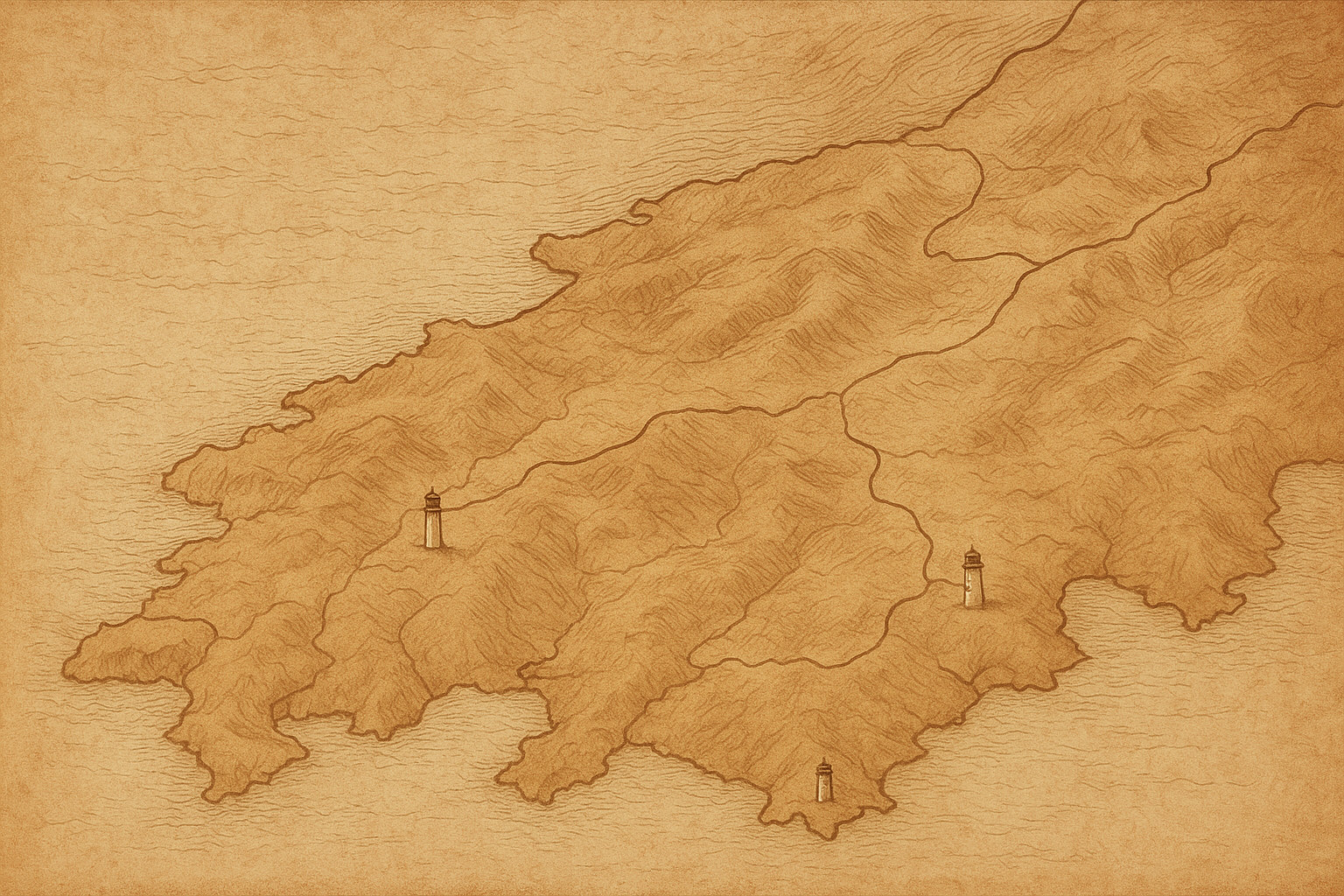
Cartographic-style coastal illustration showing a rugged shoreline, lighthouse markers, route tracing lines, and warm archival paper tones
Coastal trace

Preserved towers

Surviving landmarks along the northern coast

A quick geographic read of towers still standing today, with concise notes on stewardship and memory.

Coastal area

Harbor Mouth

Northbreak Point Light

Preservation note: Exterior masonry is actively stabilized through recurring conservation work and seasonal monitoring.

Historical cue: Long associated with rough-weather passages entering the inner coast.

Coastal area

Outer Shoals

Saltwind Beacon

Preservation note: Lantern housing remains intact with periodic upkeep by local heritage partners.

Historical cue: Remembered as a dependable sightline for nearshore fishing routes.

Coastal area

Estuary Reach

Reedbank Light

Preservation note: Timber gallery elements are conserved in phases to retain original character.

Historical cue: Known in oral histories as a marker between tidal flats and deeper channel water.

Coastal area

Cliffline Passage

Greycap Head Tower

Preservation note: Structure is protected as a standing landmark with carefully limited public access.

Historical cue: Frequently cited in keeper recollections as the last visible light before open water.

Continue into field context and documentation methods in Research Notes (Visit).